2 June 2026
Why We Hold At 35 To 45 Days
Enzymes already inside the muscle do more to a piece of beef than anything we add to it.
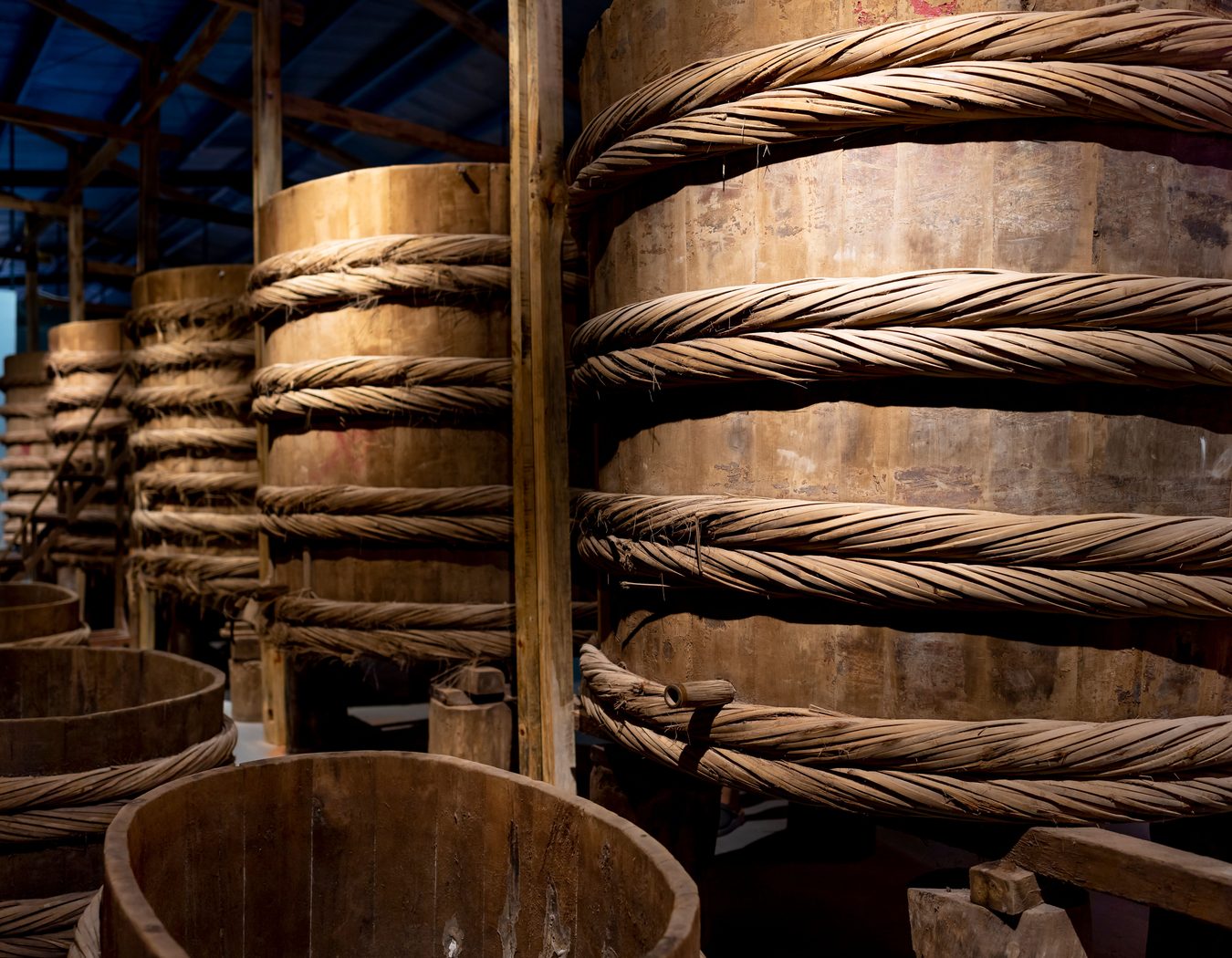
Dry aging doesn't add anything to a piece of beef. No koji, no cure, no smoke. You hang it in cold, moving air and you wait, and the only active ingredient is the muscle's own enzymes doing what they'd do anyway, just slower and under control.
The two enzyme families doing the actual work are calpains and cathepsins, both already present in the muscle tissue at the moment the animal is slaughtered. At refrigeration temperature, somewhere between 1 and 3 degrees Celsius, these enzymes stay active and spend the following weeks breaking down the tough structural proteins holding the muscle fiber bundles together. Enzymes that were already going to do this job just work at a crawl in the cold instead of at body temperature.
Humidity in the room matters almost as much as the temperature. We hold it close to 80 percent, low enough that the surface can dry into that protective crust, high enough that the muscle underneath doesn't lose moisture faster than the enzymes can work through it. Too dry and the outside seals before the interior has had its full 35 days. Too wet and mold takes hold in places we don't want it, which means checking the room by hand most mornings rather than trusting a single reading on a dial.
We hold our beef for 35 to 45 days, which sits at the upper end of where most kitchens stop. The reason isn't a house rule for its own sake. In the first two weeks, moisture is still leaving the meat relatively freely from the surface inward. After that, the outer layer dries and tightens enough that it becomes close to impermeable, and everything happening from that point on is concentration rather than dehydration. The flavor gets denser because the water that's left is carrying the same amount of fat and protein in a smaller volume, not because anything new is forming.
The tradeoff is weight. Meat held this long loses somewhere in the range of 6 to 15 percent of its starting weight to moisture, plus a hard outer crust that gets trimmed away entirely before the cut ever reaches a plate. You're paying for water and trim on every single piece. It's the arithmetic of a piece of meat that's physically smaller and lighter by the time it's usable, priced into every cut before it's cooked.
Past 45 days, the tenderizing gains slow down but don't stop, and the flavor starts moving toward something closer to blue cheese or aged cured meat, funkier and less like beef. Some kitchens chase that on purpose. We don't, mostly because the room downstairs is set for the rest of what we hold there too, and 35 to 45 days is the window where the beef itself is at its best without needing a separate room run at a different temperature just for it.
None of this is visible on the plate as a process. It just tastes like beef that's had three to six weeks for its own enzymes to finish a job nobody rushed.